
My breast cancer story starts like so many others, with a short trip, this one to get a routine mammogram.
Breast Cancer Biopsy
Over the years, many of my mammograms have come back with issues that necessitated follow up, and so did this one –it revealed a spot.
I didn’t give much thought to it, even when I was told I’d need a biopsy. I’d already had a number of biopsies and they hadn’t turned up cancer.
Lumpectomy Surgery
I was lulled into further quietude when the surgeon reassured me there was only a 10% chance this tiny spot in my breast was cancerous. I knew I would ace this test like I aced everything else. Or so I thought.
Discovering Cancer
Little did I realize I had already begun my safari into the Breast Cancer Jungle. We’d left “civilization” and I was now a passenger in the process of discovering a strange exotic thing growing in my body.
The first leg of this expedition took a couple of months. From the time of that mammogram to the day my surgeon left me marooned in a lagoon of words I did not ever want to hear –invasive lobular carcinoma, which was just a clunky way of saying it was CANCER.
Cancer Family History
Other family members preceded me as passengers on this unwanted journey.
My family history of cancer includes my father, a survivor of stage 3d colon cancer, and his mother, my grandmother, who had breast cancer at a youngish age, and a single mastectomy to go along with it.
Hereditary Cancer
This unfortunate right of passage had reached down into the third generation, and now I too was included.
What decisions would I make? How would I withstand the pressure of this disease and the grind of the Cancer Industrial Complex?
I’m still figuring it out. The most challenging part has been going through the mental and emotional parts of this journey.
Breast Cancer Genetics
It all began when I was diagnosed with the BRCA genetic mutation in 2008. Ever since I’ve been under high surveillance for breast cancer.
Breast Cancer BRCA Gene
Still, when I was diagnosed with breast cancer, late in the summer of 2021, like many patients, I went into physical and emotional shock. First came the overwhelm, then meltdown.
I lost myself as the Cancer Industrial Complex swung into high gear.
The Cancer Industrial Complex
Waves of treatment options flooded my world.
I received calls from the radiation center and was scheduled for radiation before I had the cancer staged. It was as if I vanished when the cancer crystallized.
They were looking out for me, taking care of me, but still, I was “disappeared.” In addition to taking a pause to find myself, I needed time to gather more information.
Multiple Sclerosis and Cancer
When I came up for air, a couple of weeks later, I put on my medical detective hat and began researching the safest cancer treatments.
This was critical for me since I suffer from several autoimmune conditions including MS.
How Many Breast Cancer Stages Are There?
Meanwhile, during my search for the best treatment for me, I was making plans to get the cancer staged. There are four stages of cancer.
Staging would require surgery for the second time in less than two months.
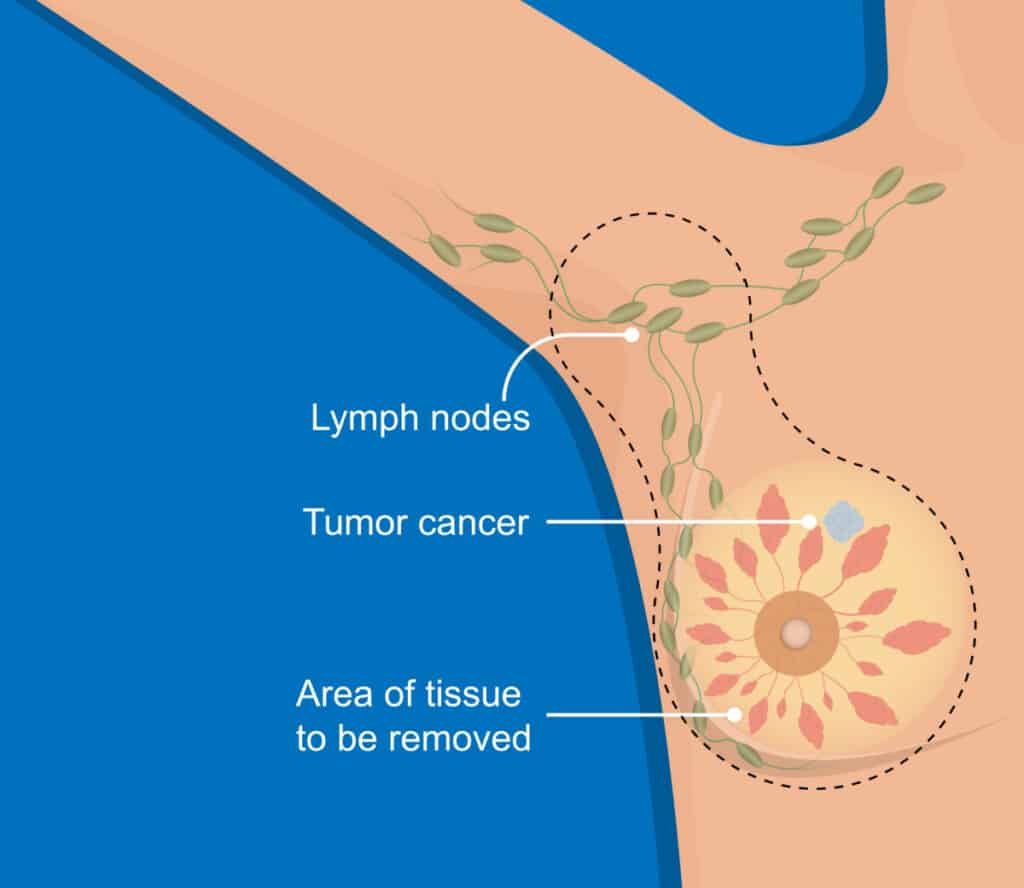
In late September, my phenomenal breast surgeon, Dr. Stephen Johs dissected my lymph node, after a radioactive dye was injected into my nipple. I awoke to learn the cancer had not spread. It was stage 1 cancer –considering things could be so much worse, I felt great relief.
That lasted for two weeks. Then the treatment options came home to roost, and I was faced with a series of tough choices and insomnia inducing dread along with them.
Disease of Decisions
Cancer is a disease of what can seem like never ending stress and a long string of difficult decisions. Chemo or radiation? Lumpectomy or mastectomy? Single mastectomy or double mastectomy? Implants or flat closure?
Cancer Treatment Options
I was swimming in confusion and at times, buried in denial.
Ultimately, when it came to treating the cancer, I decided not to do radiation.
The MTHFR genetic mutation combined with a heaping dose of electromagnetic sensitivity and certain studies I had read made me realize this was not the right choice for me.
Mastectomy vs Lumpectomy
Rather than lumpectomy with radiation, I chose amputation –to have my breasts taken off.
This decision further made sense because the BRCA mutation gave me a high likelihood of recurring breast cancers.
Breast Implants or Flat Closure?
Now that I had resolved to remove my breasts to save my life, I faced a new set of unyielding decisions.
The impending double mastectomy meant I had to figure out whether to do reconstruction with implant surgery or have my breasts removed without replacement, referred to as flat closure.
How to Make the Right Decision?
As my research continued, I found myself vacillating between flat closure and breast implants, swinging back and forth repeatedly, and somewhat neurotically, for a couple of months.
The decision kept me up many sleepless nights.
Yes, I knew I would have my breasts amputated, but I could not decide whether to leave them with a flat amputated look or undergo reconstruction after they were taken off.
Oddly, I felt like whichever choice I made was the wrong one.
Perky New Breast Implants?
Truly, the idea of having perky “new” breasts to replace the old ones I would lose was tantalizing and I spent a couple of months researching it.
Along with this research came a stream of endless assurances from every single doctor I spoke to about silicone or saline breast implants. They’re totally safe. I was told over and over again, without fail.
Yet I never believed this would be true for me.
General Anesthesia and MTHFR Mutation
Still, if I could put aside my own fears about the risk of breast implant illness that had gained a strong toehold in both my mind and gut, I remained concerned due to the fact that reconstruction surgery would mean more procedures and as a consequence, more general anesthesia.
Given that I have the MTHFR genetic mutation, clearing toxins out of my body is far more difficult than for the average person, so this was of grave concern.
Furthermore, I worried that placing a foreign object in my body would pose a potential risk to me, given MS and a multitude of environmental allergies.
Breast Implant Illness
Along those lines, the last thing I wanted was the risk of breast implant illness (BII), a condition regarded with a fair amount of skepticism and disbelief by the medical establishment, but not at all uncommon on an anecdotal level.
Breast Implant Cancer
Another concern? Breast implant cancer, known as anaplastic large cell lymphoma (ALCL).
Breast Implant Recall
This cancer of the immune system is caused by an Allergan implant1 recalled in 2019.2
Allergan Implants and Explants
As an aside, I am absolutely horrified thinking of the women who struggled to overcome breast cancer, undergoing mastectomy surgery and opting for implants.
Can you imagine going through all that and then discovering that a cancer-causing substance was placed inside your body? I can’t!
The idea terrified me, along with the thought of facing another surgery to explant a cancer causing implant.
Going Flat
Ultimately I chose flat closure, not to have my breasts reconstructed in any way.
Note to readers: If you are considering flat closure, Kim Bowles’ website, Not Putting on A Shirt is a must visit; you can also read more about her mastectomy and flat denial in Cosmopolitan magazine.
How Breast Cancer Feels
In the end, offering your breasts in any form to the Gods of Cancer is a terribly personal decision.
I did so for my own physical health and peace of mind, and I understand that this is only my decision in a very bad situation, one that worked for me.
There are many paths and forks in the road on the voyage into the Breast Cancer Jungle. If you are hanging from its branches, only you will know what’s right for you.
Double Mastectomy Surgery
In early February I underwent a double mastectomy, my third surgery in six months. At that point, I was physically spent, emotionally exhausted, and full of hope.
Post Mastectomy Life
Thrilled to put the surgical component of the double mastectomy behind me, my relief was short lived.
Unfortunately, the surgery on the non-cancerous side of my chest was aggressive, I was hollowed out to the point of concavity. The surgical result was asymmetrical, unexpected, and painful.
Although I inquired a couple of times, I was given no explanation.
Both the physical pain and aesthetic result do not make sense to me at this point and are a bit of an additional trauma on top of cancer and losing my breasts.
The confusion and misunderstanding around this situation makes the healing process and emotional resolution around this surgery a bit more challenging.
Putting the cancer experience behind me when I live with pain as a near constant reminder is not an easy process.
Post Mastectomy Pain Syndrome (PMPS)
Today, at more than six months out, the right side of my chest and armpit are filled with a burning neuropathic pain, referred to as post mastectomy pain syndrome (PMPS).
In the world of breast cancer, it’s easy to convince yourself that after your breasts come off, you will simply move on. I myself was under this illusion.
Breast Cancer PT and Axillary Webbing Syndrome (AWS)
I’m now heading to my fourth physical therapist for treatment of the burning neuropathic pain, along with an armpit and portion of my back that are numb, and axillary webbing syndrome (AWS), a condition also referred to as cording.
In my quest for sensation, pain relief, and healing, the helpful and caring physical therapists tell me to speak with my surgeon since there is not much more they can do for me. We will see where this leads.
On that note, I’ve found solace in Meghan O’Rourke’s book, The Invisible Kingdom, a fantastic primer on the revolving door that is women’s health care today in the US, and which I once again find myself in.
Ovary Removal
Thankfully, life goes on as I swing from branch to branch in the Cancer Jungle, wondering what will become of me since this trying year is not over.
In the fall I will have my fourth surgery in just over a year, this one a hysterectomy to remove my ovaries, tubes, and more, while hoping for a negative biopsy.
A Collection of Symptoms
And so, to the diagnoses of multiple sclerosis, celiac disease, and autoimmune thyroiditis, I now add breast cancer.
My One Year Cancerversary
July 2022 was the month of my one year cancerversary, and I’ve spent almost every day of the last year dealing with the medical system.
Some days I’m reduced to feeling like a collection of symptoms.
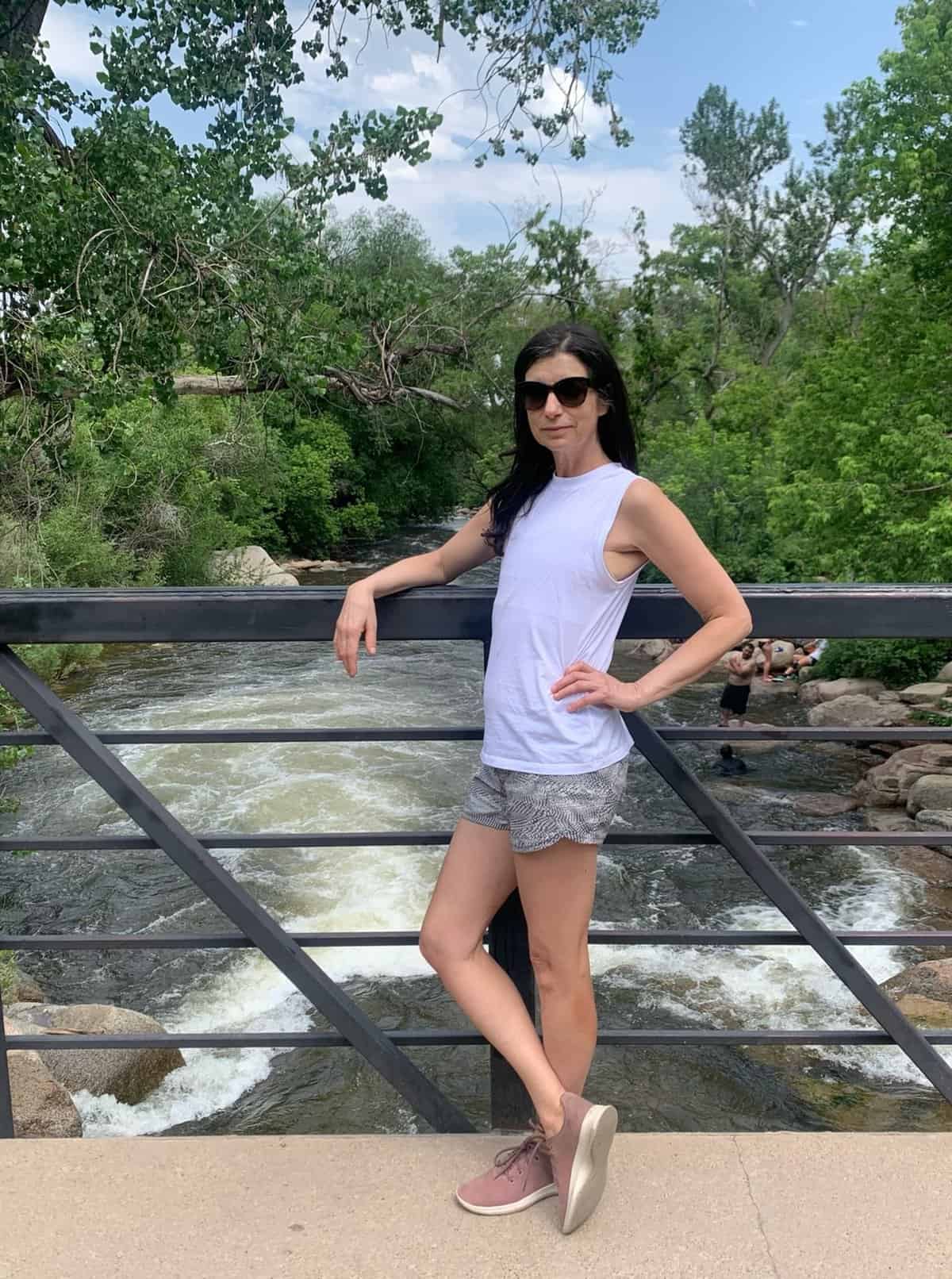
On the worst days, I feel like I’m breaking apart. Other days, I go on a hike and feel like I look in the photo above –happy to get outside and drink in nature.
Cancer and Toxic Positivity
As one of the survivors in a Facebook group for flat folks like myself said:
I’m not brave, thriving, happy. I’m scared, scarred, and numb.
She goes on to say that being shown only smiling women, all those brave warriors and happy survivors, burdened her with a toxic positivity that added to her anguish.
I understand this –being told you’re strong and brave when you’re falling apart can cause a bit of cognitive dissonance.
The Dark Side of Breast Cancer
Yes, I know this is an incredibly dark piece of writing for me to share with you.
I’m generally optimistic. But for me, everything about breast cancer is dark. As they say, “cancer sucks” and this writing is about that experience, that part of my life.
Life and Death in the Cancer Jungle
That wraps up this summary of my trip into the Breast Cancer Jungle.
Many with a cancer diagnosis wrestle with imminent annihilation, grasping for life itself. Even for those not at death’s door, the struggle is exhausting, stressful, and burdensome.
Once you’ve entered, the Cancer Jungle will chew you up and spit you out. There are no silver linings here.
I am one of the absolutely incredibly lucky ones, and still, this is very, very hard.
I first published this post on August 8, 2022.





Angela says
Thank you for sharing your story & your journey with breast cancer. I too belong to this club that no one wants to belong to.
I appreciate your honesty and for sharing your path through this jungle.
Wishing you peace, pain relief and walking through this experience to the other side and surviving & thriving.
Wishing you all the best.
Elana says
Angela, my BC sister, thanks for your support.
PGH Fan says
Dear Elana,
I’m sorry to hear of your expedition into the cancer jungle. I appreciate you sharing your unrestrained, physical and emotional experience.
I have been an admirer of your investigative approach to the challenges in your life since discovering your writings on Hashimotos and Celiac autoimmune diseases. I wish you continued strength on your path to healing.
Thank you for sharing.
Elana says
Thanks for your sweet words PGH, appreciate them.
Lucille Laird says
Elena, my heart goes out to you, so much to endure. Like yourself, my eldest daughter, age 50 was diagnosed last September with agressive lobular carcinoma. She too had both breasts removed and elected to go ‘flat’. Her journey parallels yours with the exception of the hysterectomy, she did have both chemo and radiation therapy. She is on estrogen supressing hormones for the next five years. I pray that each of you and all others who are going through this challenge will overcome the cancer and live long, healthy and meaningful lives.
Elana says
Lucille, so sorry to hear about your daughter. Thanks for your incredible words of encouragement.
Karen Tintori says
From strength to strength, dear Elana. I am sorry you’re in this jungle and that your surgeon has no explanation for the depth of the surgery to your non-cancerous breast. Wishing you answers, and a refuah sheleymah. Thank you for helping others. Am sharing with a young friend with lupus who just had a double mastectomy and fillers inserted. She’s in the medical field, and may want to reconsider those perkies.
Elana says
Karen, I love that you say “perkies” you made me laugh, I think we’ve coined a new term!
Karen Tintori says
So glad I made you laugh. Which made me tear up. In a good way.
Elana says
Karen, you are amazing. I hope you’ll keep me posted and stay in touch.
Stacey says
Elana thank you for being so open and letting us in on your painful journey. This is so helpful to so many! Prayers for you and your family. You are a courageous woman.
Elana says
Thanks so much, Stacey.
Debbie says
Dear Elana,
My thoughts and prayers are with you as you dig deep within yourself to find the answers that will help your pain and numbness. The answer may be a therapist, medication, procedure, meditation, exercise or as you stated nature.
Thank you for your website, diets, recipes and shared personal stories, you are an inspiration. Blessings
Sending love and light,
Debbie
Elana says
Debbie, thanks for your support –sending love and light back to you.
Mrs. Z says
Praying for you! Thank you for sharing your life, grateful you’re here.
Elana says
Thanks so much Mrs. Z.
Aimee says
Thank you for sharing this with your community. I cannot imagine how difficult this year has been. Regarding the pain / neuropathy – have you tried reiki? When I was first diagnosed with MS I found that even though my relapse was over, my body was in a “habit” of trauma and I needed help with a “reset”. I continue frequent reiki appointments and find them very helpful. I would be happy to provide a referral if you send me a message (I am in Denver metro areas). Best of luck in your healing.
Elana says
Thanks Aimee, that is a great suggestion.
K says
Elana, I’m so sorry to learn of this. As a 35 year survivor of ovarian cancer, I too have some interesting stories that I mostly keep to myself. The glowing descriptions of those fighting cancer “bravely” or with “courage” or “grace” have never sat well with me. Cancer sucks and nobody wants to be that person. You just get through it, hopefully, the best you can.
Don’t apologize for taking care of yourself and doing your own research. Engaged patients may do better than those who are passive and tend to follow just one treatment path. But 35 years ago is the dark ages compared to newer technologies and management options.
The modern trend of making low risk women keep their ovaries has probably led to many deaths from ovarian CA, just one of my pet peeves. Life is better without those (ovaries, cervix, uterus) body parts.
I also have the MTHFR mutation but have not experienced recognizable issues from gas anesthesia. And I’ve have more than just a few surgeries. I did have some major issues from a spinal that accompanied my hysterectomy, fwiw. That led to me having to endure the first 24 hours post op with no analgesia. For me, it’s the injectables that can be the problem. Gas anesthetics are blown off and leave your body very quickly. Perhaps chat with the anesthesiologist if you can?
Elana says
K, thanks so much for sharing all that you have been through with me. I especially love this: “You just get through it, hopefully, the best you can.” Such wise words from you that I needed to hear.
Holly says
Thank you for so honestly sharing your journey. I’m glad you are able to get outside and feel comforted by nature. May all good things continue for you now. I will hold you in my prayers.
Elana says
Holly, thanks for being on this healing journey with me.