
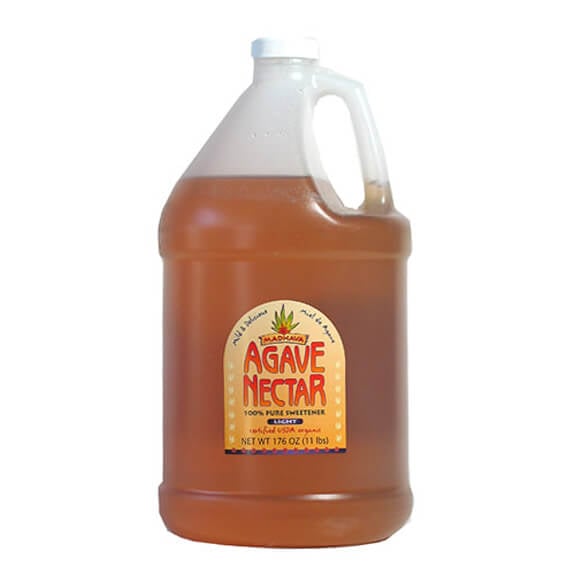
“Why do you use agave? I’ve heard that it’s very unhealthy” I’m asked this question about my “go to” sweetener on at least a daily basis.
First off, there really is no perfect sweetener, so I recommend everything in moderation.
We often take sugar and other sweeteners for granted, forgetting that they were not widely available to humans until the modern era (excluding of course, those living in the tropical regions feasting on mangoes and pineapple). Processed sugar was invented between the Medieval Period and the Enlightenment (more than 500 years ago), it became more widely available during the 1400 and 1500’s. By 1750 (with the advent of the Industrial Revolution and the invention of sugar mills) sugar became wildly popular.
So if we really think about it, up until a couple of hundred years ago, the majority of the human race (at least those living in colder climes) only experienced the taste of sweetness by eating fruit when it was in season (or when nursing, of course). The fruit that was eaten was not the overly ripe, super sweet fruit that is bred today. Think of wild blueberries –they are tiny and tart. The fruit we eat today has been cultivated for its juicy, sweet flavor.
I think the spike in diabetes and other diseases we have seen during the past decades may partially be due to the fact that humans are not accustomed to eating large quantities of sugar and are not able to efficiently metabolize this substance.
Sugar is sugar. Agave is sugar. An apple is sugar with some good vitamins, minerals and fiber. Basically, many of us (especially those with celiac) would be prudent to monitor our intake of sugar in any form (celiac and diabetes ride on the same HLA gene, so the presence of one increases the likelihood of the other).
While I do use agave in my dessert recipes, I am very cautious about my overall intake of this (and all other sweet substances) because I find that unfortunately, I am one of those whose body rebels against too much sugar. Of course, my husband and children can eat a lot more of this substance than I do and still feel great. That’s what keeps me baking like a fiend. They want their treats and they do just fine with them.
For those of you that are now on the anti-agave bandwagon, I have come up with this date sweetened recipe. Of course, I will still be using agave because I feel ok when I consume it in very small amounts.
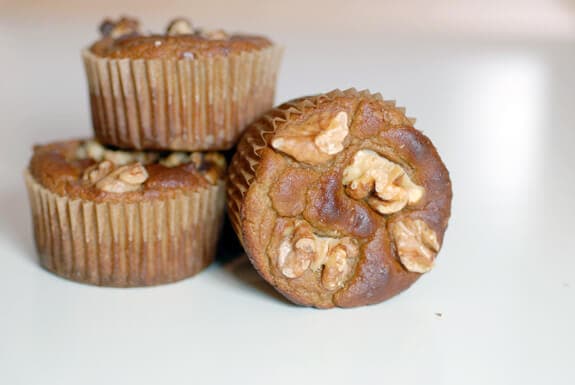
Banana Walnut Muffins
Ingredients
- 3 large eggs
- ¼ cup coconut oil
- 2 medium bananas
- 3 dates (remove pits)
- 10 drops stevia
- ¼ cup coconut flour
- ¼ teaspoon celtic sea salt
- ½ teaspoon baking soda
- ½ cup walnuts, toasted and chopped
Instructions
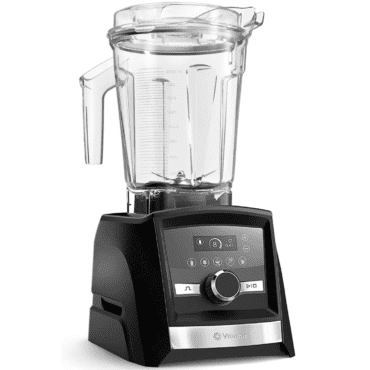
- Place eggs, oil, bananas, dates and stevia in a vitamix; blend on medium speed until combined
- Add in coconut flour, salt and baking soda and blend until smooth
- Fold in walnuts
- Scoop ¼ cup batter into a paper lined muffin pan
- Bake at 350°F for 20-25 minutes (my batch took exactly 23 minutes; all ovens are slightly different)
- Cool and serve
Equipment
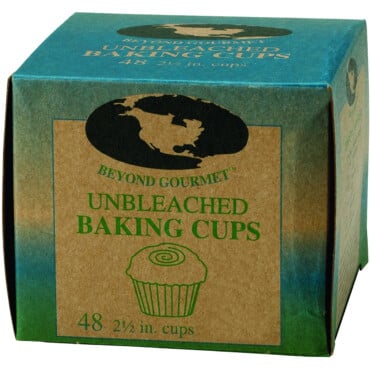
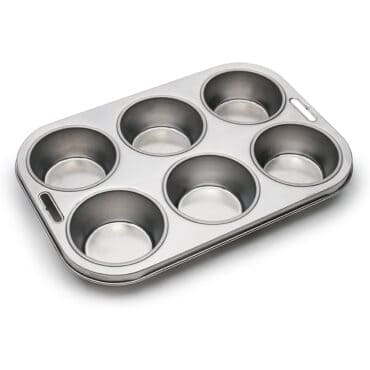
These tasty gluten-free, Paleo (I think) muffins do not contain agave for all of the agave-phobes out there. I will be creating some desserts with alternative sweeteners just to spice things up (plus, I like a good challenge every now and then). However, I will still be using agave for some recipes.
In terms of the great agave debate, I want you all to know that I use Madhava Agave Nectar. While I’ve noticed a lot of your comments with links to articles about the evils of agave syrup I want to also point out this link posted by one of my readers, Shari, from Madhava’s President Craig Gerbore.
On a much lighter note, here’s a cool coincidence in regards to agave nectar. The winner of last weeks Freebie Friday is Karen from wrighttherapies.com. She left an interesting comment regarding the controversy over agave nectar on my Asian Salad Dressing post.
Agave or not, have a great weekend!
UPDATE: please visit Madhava’s Agave MythBuster website for more information on the agave debate.



naomi says
I was surprised you didn’t mention honey, but maybe you were only thinking of manufactured sweeteners?
For me the problem with any sweetener apart from honey is that it is denatured, condensed, has fibre removed, heated etc. Stevia seems to arouse such controversy that I steer clear of this too.
Your point about our inability to adapt and metabolise the refined sugar in the modern diet is right on the money though. We should learn to eat seasonally, consume our fruit fresh – (not dried to concentrate the sweetness) and eat very small amounts of added sweetener if we really need it.
Of course, our sweet tooth is developed at the breast, so we can hardly be surprised that society eats as much sugar as it can lay it’s hands on. Our task as folks with an awareness of the negative effects of sweeteners, is to simulate conditions where a mountain of sugar/honey/agave/date syrup etc isn’t available in the nearest supermarket to feed our cravings.
I look forward to more savoury posts Elana – your savoury food always looks fabulous too.
x x x
Kimberly@Living Free says
Good gravy–there is a lot of debate about which sugars to use! I, like you, don’t do well with too much of any form of sugar. I use so little, that I just use honey. I can’t eat muffins etc. due to not eating eggs. Without baking, I have not really needed ‘sugar’ for much of anything. Thanks for the info. though!
Verde says
Wow, what a can of worms to get opened. I’ve been following sweetener issues for years since I made friends with a family from Guyana and discovered how the world was changed by sugar. It’s all still hugely political even now but it certainly was a main motivator of the slave industry and there are still huge slave issues in Brazil (part of why sugar ethanol seems so cost effective there).
Sugar grown in the United States is either cane (about half) which is mostly controlled by one very politically connected family from Florida (who has much to do with Haiti and the Dominican Republic sugar) or is beet sugar which is now, since last year’s approval already around 90% Monsanto product genetically engineered seed which is getting loose and will affect all other beets, collards and other brassicas in the family which includes broccoli, cauliflower, Brussels sprouts, kale, chard, and more via cross-pollination.
Stevia was outlawed by the FDA at the behest of the artificial sweetener industry which at the time was mainly aspartame (an exito-toxin) which became a Monsanto product and was behind the demonization of saccharine (a product that gave Monsanto its start). Now it’s sort of been cleared because Coca-Cola and Carghill have found ways to process it which gives them profitable patents on it (before as a natural product no one could lay claim on it).
Honey was a European thing that didn’t exist in North America before their taking over from the Natives (and maple syrup producing trees don’t grow everywhere on the continent). However, bees can only produce as much as they have access to food. These days they are getting fed HFCS-based replacements which really are not good for them. The biggest problem these days with honey (besides the great migration for almonds and other major monocropping but that’s a whole post there… and the CCD which currently is most thought to be a Bayer Crop Sciences nicotine based — and patented — persistent pesticide) is that most honey comes from China adulterated with many banned in the US pesticides after being laundered through other countries such as Australia and Indonesia. So, unless you know the owner of the bees (and maybe even go so far as to watch it being processed as even raw honey gets heated by some to make it pourable meaning it’s no longer raw…) then it’s hard to tell where the honey came from and what’s really in it (but cheap prices can’t be expected either).
http://www.seattlepi.com/local/394053_honey30.asp
http://www.sfgate.com/cgi-bin/article.cgi?f=/c/a/2007/10/14/CM2SS2SNO.DTL
Of course, as you might imagine there’s issues with demand causing problems everywhere as there is now monocropping happening with Palms which are destroying rain forests by plantation owned and operated by huge multi-international corps and more. Agave also has problems though what I’ve heard most is that, as we often do, demand for low prices has made it unprofitable to grow the plants, which take 7 years to mature, so some farmers have burned theirs in protest.
I think if we all really looked into what we consume and how much it takes to get to us (as well as how it affects the world environmentally as well as socially) we’d be that much more appreciative of our riches and more willing to pay what it’s really worth (so others can live at least minimally — as those in Haiti can’t — and not as slaves — as those in Africa do so we can have cheap chocolate).
By the way, as another unsolicited tidbit, agave is not a cactus being in fact more closely related to lilies, onions and asparagus. It also has quite a few nutrients and minerals which refined sugar does not (and brown sugars are just refined with a little molasses put back in for color and moisture).
As much as I’ve read, researched and gathered regarding sweeteners, I’ve never heard agave is bad. I’m interested to hear more now. I’d put money on most of the bad-mouthing being related to astroturf (itself another Monsanto invention) groups paid to look out for industry interests.
http://www.bermanexposed.org/
Thanks for the recipes and discussion.
Erica says
Thanks for clearing this up. I was becoming unsure of what to believe about agave syrup.
A says
@Kelly – I hope that everyone knows what foods are best for her/himself, and knows that not everyone’s body is the same…so what’s good for one might not be good for another. Any discussion within those parameters nice to see.
@donna – You can read more about miracle berry on Wikipedia http://en.wikipedia.org/wiki/Miracle_berry and two sites which I know of which sell it are http://www.miracleberry.co.uk and http://www.miraclefruitinternational.com
I like to idea of being able to put much less sweetener into a dish and have it still taste sweet. I have quite a sweet tooth so it would be great to be able to satisfy my cravings without eating lots of sugars.
Kimi @ The Nourishing Gourmet says
Oops! I meant Elana! My daughter’s name is Elena, so I always think of your as Elena. ;-)
Kimi @ The Nourishing Gourmet says
Elena,
You are so sweet to develop a recipe for those not using agave. :-)
Personally, I have found that agave did not raise my blood sugar as much as white sugar, so it was great to use when I was dealing with a yeast issue. I only stopped because I became concerned with my body (my liver, actually) having to process so much fructose. I use raw honey mostly now, especially for my daughter because it is supposed to be easier to digest and I like that there is such a long history of use. I also use palm or coconut sugar, which is just as low on the glycemic scale as most agave syrups, but has the advantage of being a traditional sweetener.
But in the end, I think that moderation is key, like you said. :-)
For those who don’t use agave sweetener but love Elena’s recipes (like me!), I have found that honey does very well in them! :-)
Thanks Elena for all of the hard work you put into your recipes. They are a great treat and I appreciate what you do.
donna says
i did not notice a judgemental tone here…just people discussing and i sure hope my posts were not takenas such…no judgement intended- just adding my two cents and thoughts…
i would love to know more about this ‘miracle berry’..that is something i have not heard about before…someone said it is so hard to keep up with everything..it is! it is a full time job!
i try to vary what i use but use very little sweeteners at all..agave mostly when baking or honey but i only bake maybe twice a month if i am lucky…i cannot stand the taste of stevia..i have tried and tried different kinds and it tastes just like splenda ( YUCK!) to me…and i won’t use any chemicals or artificial stuff…
anyway i think this is a great discussion and i personally am learning from it
have a great weekend everyone
Kelly says
I find it interesting that so much discussion about sugar tends towards a rather judgemental tone. It is a mystery to me why people get so fired up over what other people eat. That said, funny enough there was a post in Cooking Issues today about Agave syrup:
http://cookingissues.wordpress.com/2009/06/26/margaritaville-with-science-agave-nectar-vs-simple-syrup/
And there was an article posted a couple of days ago about a study about sweet sensitivity in terms of taste:
http://www.newscientist.com/article/dn17382-europeans-sweet-tooth-may-have-been-survival-trait.html
Mari says
I have “sweets” maybe once a month, so I’m delighted to use agave on that rare occasion. I just wanted to share a few of my favorite uses for agave. For a quick mojito, I use the light agave syrup instead of simple syrup. It works great. I’ll have to check out that NYTimes article… Also, I love to use amber agave instead of pancake syrup. My mom always made homemade syrup and so I never really liked maple syrup. The amber agave is delicious and you only need a little bit.