
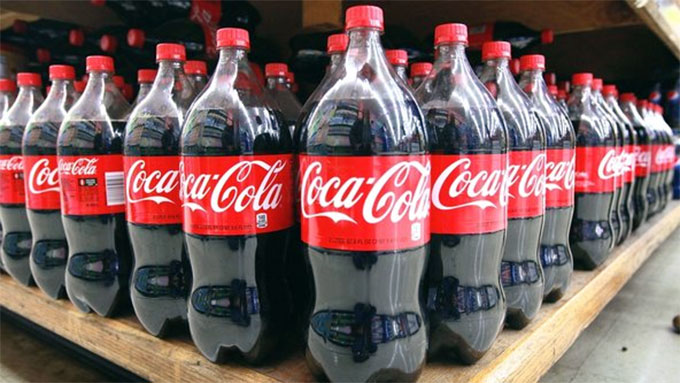
Is soda the new tobacco? That is what I was wondering after I read Mark Bittman’s op-ed piece (Bad Food? Tax It) in yesterday’s New York Times. In his article (which I tweeted several times) Bittman suggested taxing soda and subsidizing vegetables. Not such a bad idea, right?
Wait a minute. There will be loads of people who vehemently object to Bittman’s proposed soda tax. Why? They will claim that we are creating a nanny state. They will argue that the process of determining which foods are healthy and which are not is too complicated and subjective. Bittman however, has sound comebacks for each argument that the critics throw his way.
Bittman’s points are compelling, here are just a couple:
- because of subsidies to industrial agriculture fruit is more expensive than Froot Loops
- one-third of Americans either have diabetes or are pre-diabetic
- a sane diet could save billions of dollars in health care costs
Bittman has plenty of solutions for the spiraling healthcare costs associated with the Standard American Diet (SAD). He talks about spending revenues from a soda tax on local gyms and to pollinate food deserts. He also notes that for the first time in our history, “lifestyle” (preventable) diseases, will kill more people than communicable ones.”
Finally, Bittman drives his point home when discussing the historic ramifications of the implementation of the tobacco tax, noting that since its institution just over three decades ago, smoking has declined by more than half.
What are your thoughts on the soda tax? Leave a comment and let’s discuss this controversial issue.




Sara H. says
My knee jerk reaction is yay! tax soda because I feel that the mix of chemicals and sugar are highly toxic to our bodies and shudder when I see people (especially kids) drinking mega bottles of it. But then I see where it could lead- already raw dairy has ben villanized by the government and anything high in fat such as coconut milk and saturated fat that paleo people such as myself feel is healthful and healing is targeted as unhealthy by a government that believes fat is a killer. I personally think that red meat (esp. grassfed) is very healthy because of it’s abundance of omega 3’s and that chicken is less so because of it’s higher omega 6’s. However, I could see them wanting to tax red meat and not chicken. I don’t think we can trust our government to get it right when they never have before. If they would leave it at taxing non-food “food” I would be all for it.
I get angry that veggies are so expensive and junk food so cheap.
I’m sorry to waffle but this is a complicated issue.
Jean says
Agreed!
Jean says
Agreed to Samara’s comment above that is!
samara says
I think we should stop subsidizing food. Food is a subjective thing and people are smart enough to make their own choices (or not – but we do live in a democracy where people can choose their own food!). Don’t tax soda. Don’t subsidize fruit. Let food (fruit, milk, meat, veggies, eggs, whatever) be demanded and supplied locally. The government should get out of it. Look at how difficult it is to grow or produce local fruit/veggies/raw milk, etc because of the government’s involvement.
Brandy says
I LOVE IT! Fruit and vegetables should be subsidized such that a wholesome meal costs less than a hungry-man tv dinner or a McD’s meal! The cheaper solution should be the less processed (lower actual cost) one.
I bet smoking has gone down primarily b/c of information campaigns more than increased taxes.
Gloria Kolp says
I say yeah, it’s about time we tax the things that are ruining our childrens health. The eating habits in this country are embarrassing.We should also be giving the local organic farmers a helping hand.
Wendy says
You know, I don’t like the thought of taxing something like that and I don’t have a lot of confidence that the government would wisely use the revenue these days, but I can’t really argue with his article. I did go read it. I saw that Michelle Obama is teaming up with grocery chains to bring grocery stores into areas that don’t have any at all – only fast food choices. And then my DH was mentioning that he heard on the radio about an area here in the greater Los Angeles area that is 40 square miles and not one grocery store. I think eating right is a complex issue and I agree that things need to change for so many.
jej says
I am not for expanding government intervention… BUT if people expect the government to pay their health costs, this is the best solution. The easiest way to get healthier is to eat basic unprocessed foods. It’s made a huge improvement in my own health.
Marcy says
Awesome point.
But I also don’t believe the government has any business getting involved in health care. Since that train has left the station, awesome point.
Jay says
I don’t understand why you and many more Americans are so against universal/government health care? In Canada, we, as well as other commonweath countries, have universal/government health care.
Because of a couple of unexpected accidents, and a couple of unexpected emergency medical problems, I’ve had to have a few lenghty surgeries over the years. I have also had numerous medical specialists appointments. Because we have government health care, I do not have to pay for doctors appointments, or specialist appointments. I do not have to pay for any hospital surgeries, nor do I have to pay for hospital room stays, unless I wish to upgrade to a private room at 10-15 dollars a day. In other words, I don’t have to mortgage my home or take out a bank loan to pay medical bills.
Tell me.. How can that be a bad thing?
Leah says
Again, Jay, as I pointed out before, you DO pay for all of those things, you just don’t see the “bill” directly. Nationalizing healthcare will not make it free, it will simply shift the way we pay for it. Right now, the profit margin of insurance companies is around 3% (that’s not exact, but you can look up the current figures easily). Personally, I don’t trust my government to offer care more efficiently. I also think services will be overused when people think of it as “free”, when, again, it is absolutely not free. How does this solve any problems? If there are people in need of services they cannot afford, there is localized aid available in many places. The government also provides aid to those who qualify. Hospitals are willing to work out payment plans or discount services, as well. There’s no reason for nationalized healthcare in this country. Medicaid/Medicare, our current national system, is what has caused mark ups and other issues across the board, perhaps our government should try to work out the current systems in place before they expand it.
Leah says
And, Jej, do you truly believe the government is qualified to make decisions about health? I certainly agree that soda is not healthy, but the government also believes butter, lard, bacon, red meat, etc, etc are heart attack inducing, and canola oil is a health food, while the research shows they’re wrong. If we let them tax soda, what will be next?
Jay says
Of course we pay towards our health care, we’d not have a universal health care plan if no one paid into it. That’s just common sense.
If, my employer did not cover the majority of my medical premium cost throughout my working years, (which is what most employers here do) I would have had to pay a monthly premium of $60.50 if single, $109 if a family of 2, or $121 for a family of 3 or more. The percentage of the medical premium the employee has to pay, is deducted from the employees paycheck so there is no having to deal with medical premium bills arriving in the mail. When an employee retires, or thier yearly income drops because of loss of job etc, we have premium assistance. A percentage is deducted from the monthly premium cost depending on what the yearly income is. If the yearly income falls to 22 grand and under, premium assitance will cover full medical premium costs.
There are few restrictions with our medical coverage unlike the US. If a child has an existing illness, they will not be denied medical coverage, which seems to be commonplace with US private insurers.
That’s it in a nutshell. I either pay my medical premiums myself yearly, or my employer pays the majority of it, and I pay the small percentage thats left via my paycheck.
At an average cost of $726 a yr for a single person in Canada, any surgeries, doctors visits, specialist visits, hospital stays, X-rays, MRI’s, CT’s, Cardiograms, stress tests, blood tests, medical tests of any sort, are covered.
I never see endless medical bills piling up like some of my US friends have seen. I also do not have the endless amount of rediculous medical paperwork that some of my close US friends have had to deal with either.
Adrienne @ Whole New Mom says
This is a toughy, but I am really tired of the government’s involvement in almost EVERYTHING. And it is getting worse.
What really makes me upset is the ADA (American Diabetes Association). Check out this recipe that is recommended as being a good choice for diabetics: http://www.diabetes.org/food-and-fitness/food/recipes/double-chocolate-brownies.html
Complete w/ white flour, sugar, fat free fudge sauce and egg substitute.
They ought to refund all of the money they have taken in donations for this recommendation.
Jay says
The book your recipe is from Mr Foods diabetic cookbook & is being sold through the ADA website to help raise funds. Any book that is purchased throught the ADA or CDA websites, the DA, get a percentage of. Sometimes a book thats not up to YOUR standards as a true diabetic cook bok is sold, as fund raising for diabetes is low on the totem pole. In reality, there is no diabetic cookbook on the market that is a “great” diabetic cookbook. Common sense, and learning all you can about diabetic exchanges, carbs, fats, sugars, free foods, etc are the best “cookbook” for a diabetic and the diabetics spouse.
My DH is a diabetic. He also eats normal everyday foods, regular cakes, brownies, cookies, pies, desserts, etc. I never make diabetic dessert or treat recipes as most of them taste horrid, and. or, have a horrid texture. They are also, a waste of costly baking ingredients as even diabetic desserts are restricted to portion size. My DH knows he has to be in control of the size of the dessert or sweet he wants to eat. He also knows if he want that dessert or sweet, he has to deduct the dessert exchanges, from his meal exchanges. Even if the dessert he was going to eat was a diabetic dessert, those exchages would have to be deducted from the meal exchanges.
You forgot an important notation from the ADA reguarding the recipe you’ve linked us too. I suggest you add the entire thing next time, instead of trying to push the Omg, look at this, panic button.
Here is what you conveniently omitted…
________________________________________________________________________
Not all recipes presented here are necessarily appropriate for all people with diabetes, nor will all recipes fit into every meal plan. No two meal plans are alike. Work with your health care provider, diabetes educator or dietitian to design a meal plan that’s right for you, and includes the foods you love. A key message for people with diabetes is “Carbs Count.” Foods high in carbs (carbohydrates) — bread, tortillas, rice, crackers, cereal, fruit, juice, milk, yogurt, potatoes, corn, peas, sweets — raise your blood glucose levels the most.
For many people, having 3 or 4 servings of a carb choice at each meal and 1 or 2 servings at snacks is about right. Keep an eye on your total number of servings. For example, if you choose to have dessert, cut back on potatoes.
Round out your meals with a serving of:
•Meat (such as fish or chicken) or meat substitute (such as beans, eggs, cheese, and tofu) about the size of a deck of cards and
•Non-starchy vegetables (such as broccoli or lettuce). If you have three (3) or more servings of non-starchy vegetables, count them as a carbohydrate choice. Three (3) servings is equal to 1 1/2 cups of cooked vegetables, or three (3) cups of raw vegetables.
Check your blood glucose to see how your food choices or these recipes affect your blood glucose. If your meal plan isn’t working for you, talk to your dietitian about making a new one.
Along with exercise and medications (insulin or oral diabetes pills), nutrition is important for good diabetes management. By eating well-balanced meals in the correct amounts, you can keep your blood glucose level as close to normal (non-diabetes level) as possible.
The recipes on this page are only a part of what is offered in recipe books from the American Diabetes Association. Many also include information on meal planning, portion control, food buying and seasoning, as well as general cooking hints and tips for people with diabetes.
Jay says
I’m in British Columbia. Any “foods” considered junk, soda pop, candies & confectionery items(including, chocolates,nuts, raisins, and those coated with candy, chocolate, syrup, etc) Snack foods, dietary supplements where health claims are made, wines, spirits, beer, other alcoholic beverages, fruit based beverages with only 25% fruit juice by volume, single serving puddings etc, all have an added 12% tax.
I’m in total agreement with taxing junk food. It should only be bought as a once in a while treat anyway. If parents are buying junk food regularly, they’re setting their children up for a lifetime of health issues. Who’d want to do that?
Jenifer says
If the government can start controlling what we eat and consume, then where does their control end? Ya, its nice that people want to help this fat epidemic in our country but its not okay when it means infringing on our rights. The constitution protects us against this kind of control. Control is bad, its socialist…and its time that we stand by our constitution and keep the government out of everything.