
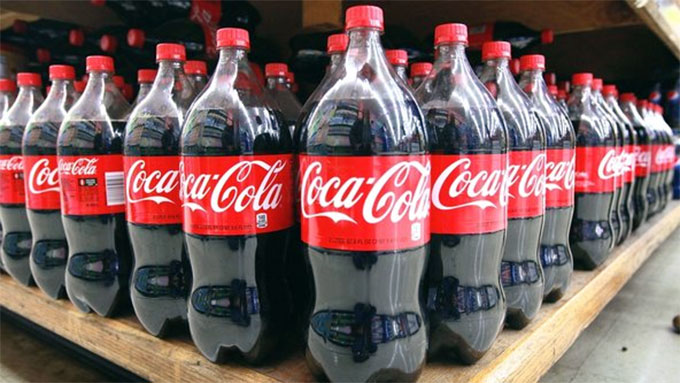
Is soda the new tobacco? That is what I was wondering after I read Mark Bittman’s op-ed piece (Bad Food? Tax It) in yesterday’s New York Times. In his article (which I tweeted several times) Bittman suggested taxing soda and subsidizing vegetables. Not such a bad idea, right?
Wait a minute. There will be loads of people who vehemently object to Bittman’s proposed soda tax. Why? They will claim that we are creating a nanny state. They will argue that the process of determining which foods are healthy and which are not is too complicated and subjective. Bittman however, has sound comebacks for each argument that the critics throw his way.
Bittman’s points are compelling, here are just a couple:
- because of subsidies to industrial agriculture fruit is more expensive than Froot Loops
- one-third of Americans either have diabetes or are pre-diabetic
- a sane diet could save billions of dollars in health care costs
Bittman has plenty of solutions for the spiraling healthcare costs associated with the Standard American Diet (SAD). He talks about spending revenues from a soda tax on local gyms and to pollinate food deserts. He also notes that for the first time in our history, “lifestyle” (preventable) diseases, will kill more people than communicable ones.”
Finally, Bittman drives his point home when discussing the historic ramifications of the implementation of the tobacco tax, noting that since its institution just over three decades ago, smoking has declined by more than half.
What are your thoughts on the soda tax? Leave a comment and let’s discuss this controversial issue.


Dena says
Wow ….If the goverment wants to control food and taxes…..what food is good and what food is bad…..try limiting FOOD STAMPS to only good food……why should we pay for these people to eat bad food?? This will help with Diabetic problesm as well….Leave the rest of us that pay for our own food ALONE :)
Stephanie says
I would support that.
Stephanie says
I work with many people who receive food stamps, mostly mothers. Most of them are trying to stretch their money to get healthy food for their children.
The best thing to come about in my area (Massachusetts, Boston metro) are grants that permit farmer’s markets to double food stamps money. Most local markets now accept food stamps and double the first $10 of food stamps spent to $20. My clients love it, and are so pleased to be able to introduce their children to fresh, healthy food even if they can’t afford it all the tim.
Don’t limit what food stamps can buy, but find a way to make fresh foods easily available.
JennyRose says
I spoke to a local elementary school principal about school lunches. He didn’t dismiss me, but wasn’t supportive of change. I have seen the cafeteria lunches at his school and the children with weight issues at his school. I asked if he ate the school lunch and he emphatically said “NO!”.
SherriS. says
I do not want the government dictating to me what’s healthy or not. The current food pyramid shows a bigger portion of my daily diet should be grains – well I’m gluten intolerant! I’m losing weight (50 lbs now) by eliminating sugar and junk-food carbs out of my diet. I do this willingly not because I’m “taxed” for it.
I also was amazed at the prices at the movie concession stand yesterday. Long lines of people buying very expensive junk food. Not me though. I’m on a tight budget.
P.S. To an earlier poster: The government doesn’t need more money. They need to stop wasting it.
samara says
you’re so right!
Jenna says
I absolutely agree wit a soda tax. It’s true I only have a few cane sugar sodas a year, but by the same token I wouldn’t oppose a coffee tax. I know every time I go into Starbucks I’m CHOOSING to spend money on something I don’t need, that is full of empty calories, and I view it as a treat. Same thing if they wanted to tax ice cream, potato chips, etc. Or even chocolate bars or bags of sugar. I’ll gladly help pay for veg subsidies if I choose to have a treat!
whatnext says
sorry for the typos. my typing is hopeless….
Capi says
I agree with Jenn. The government needs to solve it’s own problems and quit subsidizing anything. Period. Only then might things even back out.
whatnext says
Elena, how do you suppose the cooking that some of us have to do (high-ish in fat and calories) would fare in the harsh spotight of the Food Police? how would your cupcake book do under this sort of scrutiny? there is some validity to the “camel’s nose under the tent” theory. underneath this apparently “reasonable” proposal, politics is always lurking. ever wonder why no one has gone after Ben and Jerry’s, the makers of that yummy stuff that equals hear attack on a sugar con? check their politics. that’s much of what counts with the Food Police, except maybe desiring to experience of the warm glow that enforcing their worldview in others “for their own good” gives them.
Brenda Gaines says
http://www.naturalnews.com/029403_high_fructose_corn_syrup_liver_damage.html
This article about new studies on high fructose corn syrup shows that hfcs is in almost all processed foods, not just soda, maybe we should tax high fructose corn syrup instead of subsidizing the production of genetically modified-RoundUp resistant corn.
Debbie says
yay for that!
Reiko says
I’m seeing a lot of posts about how the “government should stay out of our business,” so we should therefore not tax soda.
Seriously? Does anyone even realize how integral government policies and subsidies already are in the food industry? If they can subsidize GMO corn and CAFOs, I say they can tax the shit out of soda and tobacco. Either that or go with no subsidies whatsoever, which is fine if you’re willing to let your less fortunate neighbors starve (the price of processed foods and factory farmed meat and dairy would skyrocket if there weren’t any food subsidies).
But to let the government continue subsidizing factory farms and NOT tax process foods?? C’mon, people. Either the government continues meddling with our meals or we have a risky food revolution. Pick one view and support it consistently.
Jean says
I think the solution is to remove *all* those subsidies and interventions. The whole system is a maze of imbalance reflecting the work of special interests. Some of those seem innocuous – subsidies for corn isn’t bad, eh? But they aren’t when they result in things like high fructose corn syrup. The system needs to reset and people need to be empowered and educated. And not educated with materials generated from the Department of Agriculture.
Stephanie says
You really think that people would starve without hamburger helper (and the like)?
Prices would fluctuate and corporations would do what they are good at, making money. They would find things to sell that lower income people could afford. The poor aren’t stupid.
Reiko says
This is not about stupid choices. It’s about economic decisions. A huge portion of food subsidies go towards meat, dairy and grains (we’re talking like 70% here). It’s not just processed foods that will get affected. All foods will, and everyone will need to pay more for their food. Personally, I am in a very comfortable financial situation and I can afford organic whole foods. Others, however, are not as fortunate, and for them it is more rational to buy cheap unhealthy foods than to sacrifice a larger fraction of their income on whole foods.
Stephanie says
I just think there is another option like cheap healthy food. I am not wealthy and can not only eat organic. When we had a budget of $25 a week for my husband and myself we did not eat much of any processed food. Cooking from scratch is cheaper. There would still be potatoes, carrots, cabbage, lettuce and many other veggies available in the stores as well as many fruits for about the same price as they are currently. From what I have read beans are not subsidized and are cheap protein.
There would be a time of food price changes, it might be a difficult. I just don’t believe any of my neighbors (or other Americans) would starve.
I think the much more simple and less government involved way would be to unsubsidized corn and the price would go up on soda, no bureaucracy needed.
Jean says
No, more taxes and government regulation are not the answer. I would argue they are a significant part of the problem. I was taught the food pyramid in school. I’ve heard it come from schools, nutritionists, doctors, and more since. It was considered “gospel”. But clearly it was in error. Given it came out of the Department of Agriculture did anyone consider it biased in any way? Government tends to be believed unconditionally. Of *course* they have our best interests at heart. But they are impacted by lobbyists and other influences that are quite powerful. Instead, pull out subsidies and other government knots in the food system. Someone, please, create a private “Underwriters Laboratory” type of organization to rate food, food providers, evaluate nutrition claims, etc.