
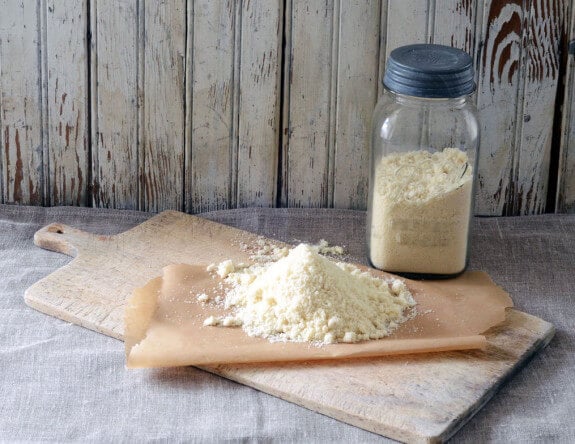
Is almond flour a good flour for the Paleo diet? I am asked this question here on this website many times each day, and the answer is a resounding yes!
First, almond flour is highly nutritious. For those of us watching our glycemic index, it is high in good fats and protein, and low in sugar and carbohydrates. Second, it is easy to use. Most of my almond flour recipes have 7 ingredients or less. Third, and most important of all, it tastes great! It is moist and delicious with a smooth buttery texture. Unlike other alternatives to wheat flour, such as rice flour, almond flour does not have an odd gritty texture.
I started testing gluten-free flours in 1998, when I was diagnosed with celiac disease. After having tested just about every gluten-free flour out there, I can save you a lot of time and hassle when I say that almond flour is far superior to other flours in terms of every major aspect –nutrition, ease-of-use, and taste!
Please note, in all of my recipes, I use blanched almond flour! My recipes will not work with unblanched almond products, or almond meal, in fact, they will be epic failures, so I do not recommend even trying unblanched products.
I avoid purchasing almond flour retail at all costs! It is more than $15 per pound in the grocery store. If you purchase it online it is generally less than half of that including shipping. Yes, still expensive, but packed with protein and flavor, so for me, worth the cost.
One brand you will find in retail stores is Bob’s Red Mill. This product yields poor, runny results when used in my recipes. Compared to other brands it has a very coarse texture. I do not recommend using Bob’s Red Mill almond flour in my recipes.
I store my almond flour in gallon or half-gallon glass mason jars
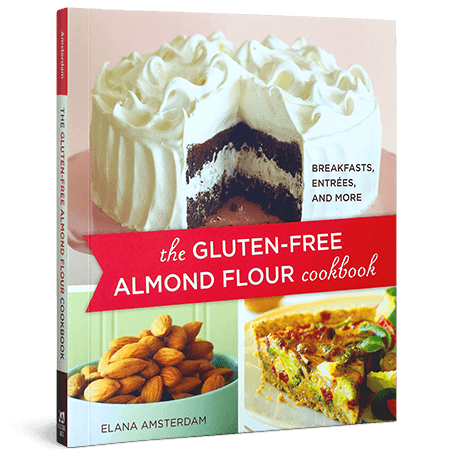
I hope you enjoy using this amazing flour as much as we do! I love it so much that I wrote a cookbook called The Gluten-Free Almond Flour Cookbook, which was published by Random House in 2009.
For more information on this super food flour, you may want to check out the following helpful articles:


Chris says
Love your website! I really need a good sweetner that is low Glycemic Index that can be substituted for agave nectar in these recipes. What do you recommend?
Christin says
I am also wondering like the people above about soaking the alomond flour…I need help digesting so many nuts. It is well known it’s better to soak nuts and I would love to know if anyone has done this with any luck? Thanks!!
kailani says
I finally found info for all of us that were having trouble digesting the almond flour.
Here is the information on “soaking” before baking.
I can’t wait to try it, let me know how it works for you!
heres the link on soaking.
http://www.heartofcooking.com/2009/08/why-soaking-flours-can-help-you-digest-your-baked-goods/
AEM says
I can’t thank you enough for posting this link and comment! I can’t digest grains or beans at all, even if I soak first, (I’m super-sensitive to lectins) and have had trouble even with almond and coconut flour. My body acts as if I’m forcing it to eat cardboard! However, after seeing your comment I tried soaking my coconut and almond flours for 24 hours in a little lemon juice and water and it worked like a charm! You have saved my culinary life. I thought I would never eat muffins or pizza dough again, but now I’m happily baking and eating my old favorites I hope everyone who reads this spreads the word to their friends and on their blogs. If I hadn’t seen this page I might have spent the rest of my life feeling deprived. I hope no one else has to do that. Thanks again!
Sophia says
Elana,
Do you soak your Honeyville almond flour or just use straight from the bag? I use Honeyville almond flour but still have trouble digesting it. Since I have a large bag and don’t have the options of soaking the almonds, is there a way to soak the actual almond flour before baking with it? Would love to hear any suggestions you may have. Thanks!
Chante Cramp says
Elana
I am trying to get all the information I can on both almond and coconut flour. I made some coconut chocolate chip cookies last night and they have a great taste, but are a little too dry…any suggestions? Here is the recipe
1 c butter
2 eggs
1 t vanilla extract
16 packets stevia powder
1/2 c raw sugar or honey
2 c coconut flour
1 t salt
1 t baking soda
1 c shredded raw coconut
2 c chocolate chips
Cream butter, sugar/honey and stevia. Add eggs one at a time and vanilla.
Sift flour, baking soda and salt together. Incorporate it into the butter mixture. Mix in coconut and chocolate chips.
Bake at 350 until golden brown
I noticed that the dough was very crumbly when I was shaping the cookies and the cookies easily fell apart once they were baked. They taste awesome though. Can you help? I would love to be able to make these and send them to my family members with type 2 diabetes.
I was also considering making a yeast bread for them since they are allowed to have yeast, just not the regular flour. How would that turn out, do you think?
colormepink says
Chante,
With just a quick look at the recipe, I would say that the proportions of butter & egg to coconut flour are off. Coconut flour can’t be substituted for wheat flour 1 to 1. If you are really set on using this recipe, I would say you need to cut the coconut flour down by at least half and possibly more, especially since it also calls for dried coconut. The coconut flour and the dried coconut soaked up all the available moisture (oil) and that’s why they turned out so crumbly. If you aren’t sure about experimenting then you might search the internet for recipes specially designed for coconut flour and there are a few cookbooks out there dedicated to coconut flour. Dr. Bruce Fife has one.
As for yeast-risen coconut flour or almond flour recipes, I don’t know that you would find much luck there. Without the stretchy gluten to trap the air bubbles released by the yeast, you wouldn’t get a nice, light loaf. It would very probably be very dense, possibly crumbly as well. There are a lot of quick breads available with almond or coconut flour, see this site and Elana’s cookbook for ideas. But if you are set on a gluten-free yeast bread, you may need to check into recipes that call for traditional gluten-free flours/ mixes (rice flour, potato flour, tapioca, xanthan, etc.)
keri says
I just want to give you a very big thank you for not using Xanthan gum in your recipes. See I am also alergic to corn and soy so the corn and gluten hit heads most of the time. When I first eliminated gluten I had no idea Xanthan gum had corn in it. So thank you for creating recipes with out it. i will be buying your book.:)
Cat says
Hi Elana!
I have heard that soaking almonds or flour for 12-24 hours can help release phytic acid thus making the almond flour easier to digest. I bake with almond flour (and am Celiac) but still have trouble digesting it. Have you ever soaked your Honeyville flour or do you think there is a need or it would help with digesting? Thanks so much and looking forward to your response. :)
Alicia says
Hello Cat
Yes, soaking is BEST for almond and coconut flour. But I’m not sure how it will affect the recipe. Here is a great article http://www.westonaprice.org/food-features/1893-living-with-phytic-acid.html
marnie says
Hi Cat. I am trying to figure out how to soak the almond flour too. Have you had any luck?
candice says
How long can one keep the almond flour before it goes bad? I’ve had some in my refrigerator (not freezer) for close to a year, still quite a bit left, do you think it’s still okay? Can’t find any info on the Honeyville site.
Also, I don’t have any dietary restrictions and was having pretty mixed results w/the almond flour alone so have started mixing it w/other flours (whole wheat, etc) and really adds flavor/texture, just a suggestion for those other non-restricted folks out there.
Cat says
Hi Elana!
I have heard that soaking almonds or flour for 12-24 hours can help release phytic acid thus making the almond flour easier to digest. I bake with almond flour (and am Celiac) but still have trouble digesting it. Have you ever soaked your Honeyville flour or do you think there is a need or it would help with digesting? Thanks so much and looking forward to your response. :)
Elaina Harman says
Could you put on your list of possible recipes to make, one for larabar or something similar. I love those and feel it could be cheaper to make at home. Would that be something you would consider doing?
Thanks so much, love your site.
Elaina
jessica says
Elaina,
You might want to try Elana’s Breakfast Bars – they’re waaaay better than any store bought “nutritioous” bar you could buy.
:-)
Deb says
Are you sure it was almond flour from Bob’s Red Mill? Sounds to me like you were maybe using the almond meal rather than the flour. I have used Bob’s Red Mill almond meal many times and yes, it’s quite coarse compared to what a flour would be like. I don’t even know if Bob’s makes almond flour, now that I think about it. I’ll hafta check that out.