
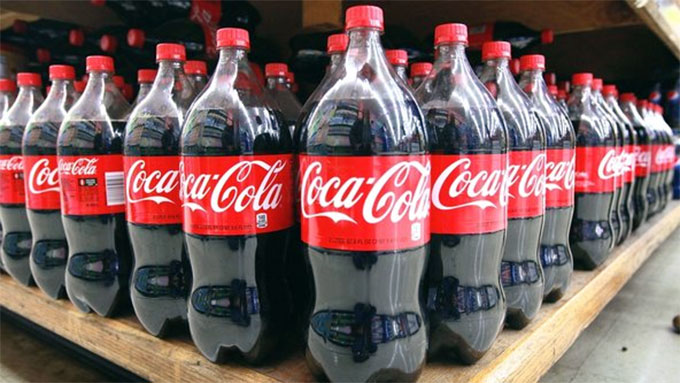
Is soda the new tobacco? That is what I was wondering after I read Mark Bittman’s op-ed piece (Bad Food? Tax It) in yesterday’s New York Times. In his article (which I tweeted several times) Bittman suggested taxing soda and subsidizing vegetables. Not such a bad idea, right?
Wait a minute. There will be loads of people who vehemently object to Bittman’s proposed soda tax. Why? They will claim that we are creating a nanny state. They will argue that the process of determining which foods are healthy and which are not is too complicated and subjective. Bittman however, has sound comebacks for each argument that the critics throw his way.
Bittman’s points are compelling, here are just a couple:
- because of subsidies to industrial agriculture fruit is more expensive than Froot Loops
- one-third of Americans either have diabetes or are pre-diabetic
- a sane diet could save billions of dollars in health care costs
Bittman has plenty of solutions for the spiraling healthcare costs associated with the Standard American Diet (SAD). He talks about spending revenues from a soda tax on local gyms and to pollinate food deserts. He also notes that for the first time in our history, “lifestyle” (preventable) diseases, will kill more people than communicable ones.”
Finally, Bittman drives his point home when discussing the historic ramifications of the implementation of the tobacco tax, noting that since its institution just over three decades ago, smoking has declined by more than half.
What are your thoughts on the soda tax? Leave a comment and let’s discuss this controversial issue.


Gretchen says
I actually like this idea a lot. It is akin to the tax on cigarettes in that it does not outlaw soda, it merely taxes it for those who choose to continue consuming it. Of course the hope is that it will reduce consumption, but for those who choose to purchase soda, the purchase would give our country some more income that it desperately needs.
darkhorse says
While I agree that soda is one of the worst products you could consume, I oppose such a notion to tax it just because the government decided for me what is good and what is not. Suppose the government would decide that raw milk and unradiated foods were unhealthy and decided to tax or outlaw those…just because someone else thought that they were going to make people sick (eg. salmonella from spinach). Hmmm…sound familiar???
jackie says
I agree with you. What the government decides is unhealthy does not always match with what I believe is unhealthy. I don’t think taxing food is a bad idea as long as they aren’t outlawing certain foods (like raw milk, non-irradiated food). If someone wants to consume a soda they still can, but now it will cost more for the indulgence. I would want a guarantee that the tax money goes to gyms or diabetic research and not to other pockets.
Paula O'Brien says
Interesting idea. Would removing corn subsidies have a similar effect? That’s what most soda is sweetened with and perhaps the revenue raised by removing the subsidy could be invested in the same ventures. Thanks for sharing this.
Sabrina says
I think that removing the corn subsidy would automatically raise the price of sodas as soda manufacturers pass the cost on to consumers. We would also see a cost rise for all foods that incorporate corn, processed and not processed, as well as gasoline supplemented with ethanol. I would prefer to have a more realistic cost of these products than an additional tax.
I’m in the public health field, and I’ve worked in tobacco cessation professionally. While a tax increase creates a spike in the number of people who try and succeed in quitting tobacco (because it’s important to remember that tobacco is a clear addictive substance, while highly processed corn has not been determined as such) it does not prevent teens and young people from starting. Therefore, a tax, or any price increase, is not going to work as an early preventative for many people who’d we’d like to prevent future chronic health conditions like diabetes.
MLR says
absolutaly.
But sometimes u gotta take what u can get
Amy Merideth says
Hi Elana
In my practice I have seen a staggering rise in childhood and adolescent obesity which I attribute to the atrocious diet of many children. But it isn’t just soda, it’s Kool-aid, Gatorade, Little Debbie snacks, doritos and chips of all kind, french fries and donuts. While I am fine taxing all kinds of junk food, I wonder where we draw the line on what’s healthy and what’s junk? Recent studies have shown that potatoes of any kind contribute to weight gain. Do we tax them even though they are a fresh food? Do we tax Ben and Jerry’s but not Skinny Cow?
We have a health care crisis and the availability of good tasting, cheap junk food is contributing to that, but I am not sure taxing is as easy as it sounds.
Amy
jackie says
I agree with you. I believe taxing “junk food” is a move in the right direction, but as you stated, where do we draw the line. What is considered healthy or unhealthy changes as research continues. The dietetic field is ever changing. What I learned 10 years ago is not the same recommended diet now.
catie says
Big Yes to the Soda tax.
Deciphering whether food is “junk food” or “good for you” food is neither difficult nor subjective. Food is a science. It’s measured in value and content. Whether or not it tastes good or if I like something or not has no bearing in whether or not a bowl of fruit loops is healthier than a bowl of plain oatmeal. We need a standard of value in our food and beverages. When and if fruit loops falls below that standard of value it should be taxed and so should its creators.
Nicole says
Food as science has been quite the saga–take margerine for example. Margerine replaced butter for decades as the healthier fat only to now be replaced with? BUTTER! Much of food science is psuedo-who-has-the-money-to-market-and-lobby science. Education is key. Giving gov’t license to choose what is healthy or not (raw milk, anyone? how about raw almonds?) is a recipe for disaster. (pun intended)
Melissa Smith says
It is time to tax soda – and not just the users. The makers of soda should be taxed at a high rate.
agnes goldberg gordon says
Finally someone with common sense,but the education about nutrition has to start at home. Taxing sodas is a great idea, Go for it!!!!!!
Anna says
That’s a distinction without a difference. Raise taxes on the producers, and they’ll charge more for their product. So even if the taxes are nominally on the producer, it’s really the consumer that is still paying.
Elizabeth Richardson says
I agree wholeheartedly! Even my 16 year old granddaughter thinks it is a great idea! She says she can’t believe how many overwieght (aka FAT) students there are at her school. We have to do something constructive to change it and taxing soda is a practical step in the right direction.
Directing the finds towards gyms would be a great idea – They have removed PE from the school now and do not require students to meet a certain level for graduation. Figure that out!
Will be interested in what your other fans think!
Elizabeth
Jerremie says
Brilliant idea. I’m all for it, and the sooner the better. Removing subsidies from unhealthy food crops and shifting them to vegetable and fruit growers is such a common sense idea… it probably has no hope of passing in congress.
Deanna Askin says
I think that is a great idea. I don’t think that we should take away people’s choice to consume gross, unhealthy food/drinks. But, we do need to raise awareness and educate the masses about the harms of so many processed foods and beverages. Just like alcoholic drinks have a surgeon general’s warning, so should soda and other food/beverage made with HFCS and poisonous additives and GMO products. I still want to have the choice to enjoy a glass of wine, but I am perfectly fine paying an alcohol tax and heeding the warnings of consumption.
Yulia says
I love Deanna’s idea about labeling unhealthy foods!
As for taxing soda: go for it! It’s such a bad substance, I would ban soda all together.
AnnMarie Deis says
Yes. Alcoholic beverages and cigarette boxes contain the surgeon general’s warning, but how many people does that stop??? I for one do not want ANY MORE of my tax dollars to be spent for the government to tell me how to eat and what is and what isn’t healthy! Didn’t the government “okay” HFCS? How many people here eat HFCS-containing products? Is it because you’re taxed or is it because you live in a free country and acting in your own free will?
I think the government should stay OUT of anything that is food-related. Look at the current “sandbox” squabbling Democrats and Republicans are having now over the budget. This would only be another source of wasted “revenue” for our politicians and would most likely be spent much the same as social security was — squandered.
DJDeeJay says
AnnMarie, I’m curious, did you read the article? It very clearly states how the government got involved with reducing the smoking rates, and it worked. No, not by the warnings, but by raising the prices and taxes. The smoking rate has plummeted.
Janis says
Wow, very interesting concept. Taxing soda and using the money to subsidize vegestable farmers sounds like a smart idea. While it would help everyone out, it could help out lower income families the most. Rather than buying cheap processed foods, maybe they would buy more healthy veggies, thereby improving their health.
We subsidize agriculture for the less than healthy foods, maybe it is about time we do that for the healthy foods we should all be eating plenty of.
Thanks for sharing this.
Amy says
Absolutely NOT. The government can’t get its own financial house in order – it needs to stop meddling in private enterprise and imposing “sin taxes” for industries it deems inappropriate.
This is particularly egregious because the government has ALREADY helped diabetes to spread by giving extensive subsidies to corn growers (i.e. HFCS).
Don’t they have enough problems to worry about?
Mardi says
well stated, Amy, I agree completely
Kassia says
I totally agree!
Karen says
Amen, Amy. These folks can’t even settle how to keep from sending this country into default but they think they can tell us what to eat? What a joke. Hello, 1984 calling…
Not only that but then do they want to tax ALL sodas, including Zevia, Blue Sky Zero, Virgil’s Zero, which use natural no-calorie sweeteners and natural ingredients? As if those don’t already cost a bundle – no way, leave one of the few indulgences I have left alone!
Stephanie says
Good Point, how could they differentiate between “good sodas” and bad ones.
And really how efficient is the government at handling money anyway? How much would make it to a park local to me, none I would bet. More taxes and no benefit.
Jay says
@ Karen, there is no such thing as a “good” soda pop. Stevia, blue agave, whatever, it’s still soda pop.
sophie says
if it is sweetened with stevia and has no chemicals – it is not unhealthy…
Jay says
You might want to do some research on your stevia. I wouldn’t touch it nor would I let my family touch it. Water by the way, is a lot better for children than artifically sweetened soda pops.
sophie says
Yes, thank you, I have read about stevia. AND I have found it to be quite harmless. THANK YOU.
Ashlee Crozier says
I think you mean Splenda; which is in artificial sweetener. From what I have studied and read, Stevia is from a natural plant and is considered an herbal supplement in some cases. Zevia is one of the “sodas” sweetened with Stevia (which is NOT an artificial sweetener). So in Zevia there are NO artificial sweeteners. Splenda, is of course, harmful, and I wouldnt touch it with a ten-foot pole, either.
Jay says
@Ashlee Crozier
When Stevia is no longer in its natural state, as in the plant itself, & mass produced as a so called “natural” sweetener, its just another form of artificial sweetener as far as I’m concerned, and I’d never buy the stuff.
As for Zevia sodas. Zevia sodas contain erythritol as well as stevia for sweetening, as stevia cannot do the job alone. Stevia also has the potential of tasting bitter at times, so another excuse for adding extra sweetener.
With Zevia sodas, you have double the sweetener in whatever flavor you buy because of the erythritol. Erythritol by the way, can cause a laxitive effect if too much of it is consumed at one time.
Mountain Zevia has caffine added and is actually higher in caffine than Zevia cola. Why, is anyones guess.
Zevia cola, Zevia caffine free cola, and Zevia cream soda all have caramel color added as well as erythritol.
Zevia Cola itself, has caffine, caramel color, and fumaric acid added. Furaric acid is one of the ingredient in acne medications, psoriasis medications and is also added to animal feed.
This is a couple of paragraphs from a 2003 European Commission Health & Consumer Protection study on Fumaric acid.
FLIEGNER AND SPIEGEL (1992) reported a case of fully reversible
tubular toxicity with consecutive metabolic osteopathy following
systemic fumaric acid therapy. This secondary effect of oral fumaric
acid therapy obviously occurs very rarely, never having been
described before. A 46-year-old female patient with a long history of
recurrent palmoplantar psoriasis underwent oral treatment with
fumaric acid and its esters. Two months later, the patient started to
experience arthralgia, back pain in the early hours of the morning and
myalgia with increasing frequency, progressing to disablement in
moving and walking and, finally, to total immobility. Not until 9
months later was the reason for these severe disabilities found: they
stemmed from hypophosphataemic osteomalacia as a result of a
complex disturbance of the renal tubular system. The clinical
symptoms and the results of laboratory chemistry tests returned to
normal as soon as fumaric acid medication was discontinued. Two
attempts at reexposure confirmed the causal relationship. The authors
recommend that oral fumaric acid medication should never be
administered without clinical and chemical controls.
RASCHKA AND KOCH reported in 1999 a case of a 38 year old woman
who was treated with fumaric acid for 5 years before she complained
of fatigue and weakness. According to clinical laboratory she had
developed severe proximal tubular damage. Hypophosphataemia,
glycosuria and proteinuria persisted although medication was stopped
immediately.
BOESKEN ET AL. (1998) focused their studies on potential adverse
renal effects. 42/47 patients were observed between 3 and 70 months
(mean: 16.5 months) without showing inreased kidney retention
values, but 21/42 patients showed alterations in urin proteins. These
alterations were transient and persisted only in 2 patients for more
than 6 months. The authors conclude from their studies, that the
adverse effects of fumaric acid esters are limited to transient
alterations of the tubulus function without measurable restriction of
the glomerular filration rate. But in case of additional tubulus
poisoning (e.g. by exsiccosis, infections, treatment with drugs) an
acute renal failure could result.
My thoughts. Why do so many parents feel they cannot refuse to give their children soda pop as a thirst quencher, or in many cases a normal household drink. Regular soda pop or “natural” soda pop, they both have additives, with one being worse than the other.
Proper nutrition as has been always said, begins at home. If soda pop is never on that nutrition list, the children will not miss it. I have two children now in thier 40’s. I could count the amount of times they had soda pop throughout their childhood on one hand. It can be done..
Catie says
we are a no soda family as well….no soda, no diet soda…no natural soda….and don’t get me started on carbonation…..thanks Jay, Elana, and all of you for a very passionate discussion – I continue to learn from all of you!
Ashlee Crozier says
I totally agree on skipping soda. Since the age of 16 I have decided against it. I am now 27 and have only had soda when I am so sick I cant consume or keep down anything else (pregnancy morning sickness). I dont buy pop, and honestly the one time I tried Zevia it gave me a stomachache and I didnt even like the taste. I didnt realize that some people dont like Stevia, or consider it an artificial sweetener.
Kiersti says
You are so right on!
Dr DNA says
This tendency to rail against “chemicals” merely demonstrates a profound misunderstanding of science. Let me offer a little remedial chemistry here: Water is a chemical. Oxygen is a chemical. Organically grown, lovingly picked stevia is made of chemicals.
If you want your arguments about natural vs. unnatural food to be taken seriously you would do well to stop using the position “chemicals are bad”.
dianadavenport says
There is a huge distinction between synthetic chemicals and naturally occurring ones.
Patty says
I agree with Amy, I don’t want the government any more involved in food issues than they already are (which I think is too much!).
J3nn (Jenn's Menu and Lifestyle Blog) says
I agree with you, Amy! How about NO subsidies? The free market will work it out. The same government that creates these problems always wants to put band aids on gaping wounds. People can make their own decisions. We need to end corporate welfare altogether and then people will have a more honest choice at the grocery store.
Tracy says
Yay! I love that there are people in this world who still have faith in people. Some times I worry. Let the free market do what it does. Let us change the world with our dollars. The changes are already happening get the government out of it. They do nothing with out a corrupt agenda.
Jess says
AMEN! My thoughts exactly!
DJDeeJay says
Sure, and any politician who suggests that is the accused of being “anti-farmer” and thusly “anti-American.” I can see certain cable stations having a field day with that one.
I don’t even mean to disagree with your overall point. I think both sides have some interesting points. As much as I’d love to see corn and soy subsidies reduced or eliminated, I think it would be tough to sell that idea in this political climate.
AnnMarie Deis says
I wholeheartedly agree! I think government is big enough; I don’t want them poking through my home, too! Besides, I don’t trust the government to do what they say they will with the money they would be getting. I feel it would be like a blank check. No, thank you!!!
Judy says
I agree!! And what would be next? Agave Nectar? Honey? Pure Maple Syrup? Once you open the door anything is fair game.
Jami Fynboh says
AMEN!
Seana says
Thank you for your voice of reason, Amy.
Taxing soda isn’t the federal governments job! They never do anything well anyway. Look at the Postal sytem which runs in the red more often than not. How about Social Security? Name one thing the government does well. There aren’t many things they do well, if any. It’s the consumer that needs to vote with their wallet to make changes in what’s available out there. The government has their fingers in enough things.
Marie says
Bittman’s article and Elana’s post accept the assumption that government inevitably shapes food policy through subsidies, taxes, and legislation. Who is generally behind this policy (including many laws restricting local produce and dairy products): industrial agriculture lobbies.
In a perfect world where you could take politics and lobbyist money/ influence away, and let an unadulterated “market” system work perhaps government should not tax soda or bad foods? However, we won’t be living in this theoretical world anytime soon.
So once again you arrive at classic tea party logic. Existing policy framework that subsidizes and provides policy amenable to the wealthy and powerful corporations is inevitable and accepted. When discussing attempts to extend such helpful framework beyond corporate welfare we must return to a purely theoretical world where such actions are socialistic and the dictates of a”nanny state.”
Shaping school lunch policy to the profits of industrial agriculture, inevitable. Subsidies that make it easier for disadvantaged children to get fresh produce: tyranny! Your tax dollars subsidizing pesticide and chemical laden ConAgra, yawn. Taxing soda to subsidize fresh produce from your local farmer: outrageous!
dianadavenport says
Yes, I agree. it seems to me to attack the problem from the other side makes more sense: Do away with subsidies for junk foods to drive their prices up, which would ultimately have the same effect. Let’s just undo what is wrong, rather creating a bigger mess.