
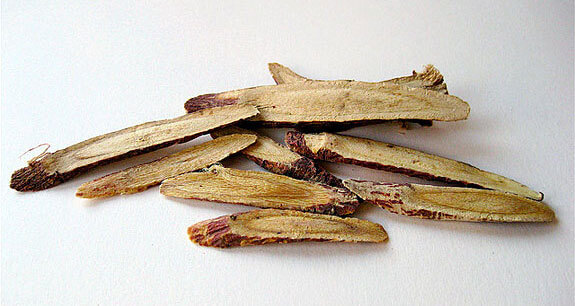
It seems like everyone I know had a sore throat last week. So I made a big pot of my favorite healing brew, Ginger Licorice Tea.
As I often do, I went on twitter, this time to chat about my fave tea for colds and sore throats. While everyone was familiar with ginger, several folks told me they hadn’t ever heard of licorice root. So here we go, I’ll tell you all about licorice root and why it’s absolutely indispensable in my home this time of year.
In the world of herbs, licorice root is primarily known as a demulcent (that is a soothing substance taken internally to protect damaged or inflamed tissue) and an expectorant (a substance that assists in expelling mucus from lungs and throat). Licorice root is commonly used in alternative medicine to treat colds and sore throats. However, licorice does not only act upon the respiratory system. It can also be soothing to the gut and work as an effective liver cleanser and blood detoxifier when combined with other herbs.
- soothes a sore throat
- loosens bronchial congestion
- reduces inflammation
- soothes digestive and gastro-intestinal issues
- helpful with stomach ulcers
Licorice is also used for chronic conditions such as adrenal insufficiency. However, used in large doses, over long term, licorice can exacerbate hypertension, so it is best to see a doctor or herbalist if you are going to use this substance for chronic conditions.
Although my background is in Ayurvedic herbology, I do have some knowledge of Chinese herbs, and licorice is used often in Chinese medicine, considered one of the most important herbs in that system. Licorice is also commonly used in Ayurveda as well, as it is very soothing for the vata dosha (constitution).
Licorice basically helps people that are experiencing ailments of “dryness” in the body become more moist. I tell my children that when you have a cold, taking licorice is like putting a humidifier in your body –that’s how it works. For this reason, licorice is not the best herb of choice for those that tend to retain water in their body –those that we refer to in Ayruveda as having the kapha dosha.
With licorice and other roots, I was taught that it is best that they boil in water for 2-3 minutes minimum to release all of their healing properties. While licorice tea is available (in tea bags) in many health food stores, to get the full benefit of the licorice root, I would recommend purchasing in bulk
I kept a pot of Ginger Licorice Tea steeping on the stove every day last week as we had severe, harsh weather here in Colorado. Every humidifier in my house was on. Some days the temperature didn’t even make it above 5 degrees. Drinking this simple herbal remedy was very moistening for myself and my family given this cold, dry tundra we’re living in this winter.
So, finally, just to be clear, when I’m talking about licorice root, I am not referring to licorice candy. This is a totally different thing made of molasses, flour and other ingredients. Let’s not confuse the pure healing licorice root with licorice candy.
Have you ever used licorice root? If so, what ailments do you use it for? Leave a comment and let us all know!




Alisa Fleming says
I hear you. The blizzards just hit here again, taking our alpine desert climate to even colder and drier conditions than usual.
I’ve yet to try licorice tea, but really should. A friend told me that licorice mint tea is her absolute favorite.
jill says
Thank you for reminding us about the healing qualities of this amazing herb. I used it for my severe blood sugar swings about ten years ago. I used this herb, along with Bach flower remedies, vegetable juices and meditation. I am free of hypoglycemia now but, I’m thinking I should use it again for all of the colds and coughs going around!
Jackie says
Licorice is great, but for those with high blood pressure or any type of water retention problem (congestive heart failure, kidney disease), please exercise caution, as it can exacerbate these conditions. Generally when licorice is used, another medicinal which promotes urination is used also to ameliorate its effects. As a board-certified Chinese herbalist and acupuncturist, I’d recommend sporadic use only for people with those conditions.
Erik says
Cayenne pepper (capsules or a tincture, or if brave, just powder in some water:) can counteract this. I find licorice capsules actually make me pee just as much or more than otherwise personally, but i have a dryer constitution that can become overheated easily, but also can become cold. Cayenne by itself bring too much dryness to me over time, it seems to disperse heat and bring a coolness actually, and seems to disturb my shen if too much is taken too long. Licorice root balances it nicely. Cayenne by itself would be good for many people with fluid retention and “cold” damp conditions. I am not licensed in any medicine, but very interested in herbs and Chinese and Ayurvedic medicine! That said, licorice by itself too long actually brings about heaviness and dampness, a pungent spice balances this (ginger, cayenne, or a cool mint, etc).
Elana says
Erik, well said. And for that reason I think you will like my Ginger Licorice Tea recipe:
https://elanaspantry.com/ginger-licorice-tea/
Enjoy!
Elana
Betty says
I have a question, Elana. I was told by my naturopath, who prescribed Baschetti’s powdered licorice teas, that I need to consume it with milk or the body would not absorb the licorice for adrenal health. He said if I could not tolerate dairy, a nutmilk would be the next choice. Have you heard of this? What are your thoughts? Thanks!
elana says
Betty,
I haven’t ever heard this and I absorb licorice very well without milk or nut milk. However, everyone is different so this may be the case for some people.
Elana
Shannon says
I made a tincture out of Licorice Root, and added several(7-10) drops per ounce to Castile soap for my bf’s dandruff.
Licorice root is also great for your gums. I have tea bags of Licorice Spice that I drink a few times a week.
The Teenie Foodie says
I LOVE liquorice, I could not live without it. I eat pure liquorice lozenges when I want something sweet and I find that they help with digestion after a meal.
Have you ever tried liquorice tea with lavender? Its delicious! Also I like liquorice with fennel in tea to soothe the stomach.
Great post elana, so glad to see liquorice becoming more popular. Its good for you and has a bonus natural sweetness.
donna says
i have wanted to try licorice because it would be good for SO many things for me…but i have read conflicting things about it interacting with drugs like blood thinners- which i, unfortunately have to take ( tho i am doing my own research on how to get off of them and do it naturally- it is taking time to get the info )…i have 5-6 herb books and they all say different things…do you know elana what is a dependable source of information on this? i am sure using it for a short time would not make a huge difference but i always like to be sure before i use an herb…i have been using them for years and if there is any doubt i just don’t use them…
thanks!
elana says
Donna,
As I recommend above “it is best to see a doctor or herbalist,” especially when using licorice in combination with other items.
Elana
donna says
yes….unfortunately – not in the budget ;-)
Shannon says
Yes, I really like licorice for adrenal and hormone support. While I am not a huge fan of the flavor, I really find it very healing and balancing for hormones.
Angie Halten says
What a great article on Licorice Root. I didn’t realize all the benefits of using it. I’m in the throws of coughing and sneezing due to this miserable cold I have. I’m headed out today to get myself some Licorice Root. Thanks for the valuable info!
Angie.
Tai says
I have been using licorice root for about three months now (in drop form). My clinical nutrionist put me on it for adreneal fatigue. It, along with some other supplements, has helped trememdously. I am glad it helps with inflammation as well, since I am a Celiac in the healing stages!